Alan
Normal PeopleAlan is Marianne Sheridan’s older brother and the most direct agent of violence in the abusive household she shares with their mother, Denise Sheridan. He repeatedly treats Marianne’s independence as a challenge to his authority: he questions where she is going, ridicules her isolation, and warns her not to tell their mother when he has mistreated her. His abuse escalates from intimidation and humiliation to an attack that leaves her injured, making him central to the novel’s portrayal of how family power can normalize harm and silence its target.
Identity and Family Background
Alan lives with Marianne and Denise in Carricklea. The evidence presents him chiefly through his conduct toward his sister rather than through an independent account of his life. He is particularly anxious and volatile when the household has guests; after relatives leave at Christmas, he follows Marianne into the kitchen and turns a remark about her exam results into an extended exchange of insults and threats. The scene shows how quickly ordinary family circumstances become an occasion for him to assert superiority.
The family’s treatment of Marianne is not confined to Alan. Denise has already decided that aggression by men toward Marianne is acceptable, and she interprets her daughter’s detachment as evidence of a deficient personality rather than as a response to mistreatment. Alan’s ability to demand that Marianne keep quiet therefore rests within a household where he has reason to expect little resistance on her behalf. The novel distinguishes his direct acts from the wider family conditions that help sustain them.
Control and Intimidation
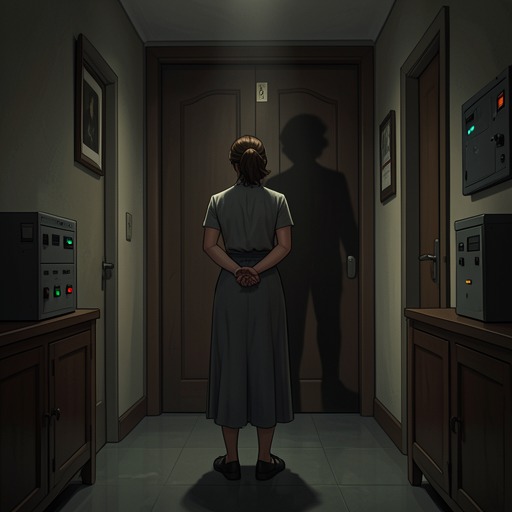
In February 2011, as Marianne is preparing to leave the house, Alan intercepts her at the door and asks where she is going. When she says she is going for a walk, he tells her that he knows she has no friends. Marianne attempts a placid smile in the hope that he will let her pass, but he mocks the expression and continues questioning her. When she moves toward the kitchen’s patio door, he grabs her arm and warns her against going to their mother about it. Marianne denies that she is doing so, leaves by the patio door, and sends a text once outside. Alan’s obstruction has turned a simple walk into an encounter she must carefully navigate.
His control also depends on making Marianne’s social isolation into a weapon. He invokes her lack of friends not as a passing observation but as a way to shame her and diminish her confidence. Years later, he again frames her relationship with Connell as something he has authority to forbid. When Marianne returns home after visiting Connell, Alan blocks the stairs and tells her not to go near him, invoking what people in town might say. He insults Connell and uses local reputation as leverage, but Marianne refuses to present concern for gossip as a reason to obey.
Humiliation and Family Conflict
At Christmas, Alan follows Marianne into the kitchen after their aunt and uncle have left. While she washes the empty teacups, he criticizes her for supposedly boasting about her exam results, calls her pathetic, imitates her measured replies, and says that people in town speak badly about her. When she laughs at the claim, he pulls her away from the sink and spits at her. Marianne responds with a brief expression of disgust and resumes washing the dishes; only then does she notice a tremor in her hand. The routine task and her restrained response make visible the pressure of an episode that she does not turn into a confrontation.
Denise’s Christmas gift sharpens the contrast between the family’s surface gestures and its treatment of Marianne. She gives her daughter five hundred euro in an envelope, then questions whether Marianne understands the demands of adult life. When Marianne points out that people at work would not be expected to spit at her over a disagreement, Denise calls the incident sibling rivalry and strikes the kitchen table. Alan’s aggression is therefore not simply hidden from the family: the household’s response minimizes it, leaving Marianne to manage both the incident and the denial surrounding it.
Escalation and the Attack
When Marianne comes home after seeing Connell, Alan is waiting in the hall with a beer bottle. He questions why she is seeing Connell and warns her not to go near him again. As she tries to reach the stairs, he blocks her way; when she says she does not care what people think, he throws the bottle. It smashes behind her. She runs upstairs and holds her bedroom door shut while Alan follows, tries the handle, and kicks the door. She asks him to leave and says she will clean up downstairs without telling Denise, an offer that shows how much of her attention is still directed toward preventing the situation from worsening.
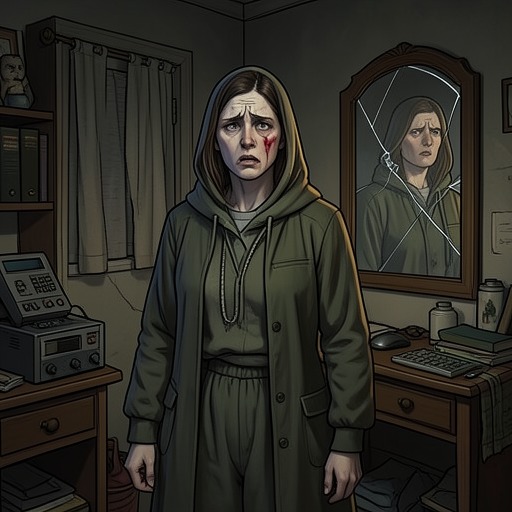
Alan forces the door open, and it strikes Marianne in the face. She is left bleeding and disoriented. The scene marks a decisive escalation: what had repeatedly taken the form of threats, humiliation, and physical intimidation becomes an assault with an immediate injury. The narration also places this event against Marianne’s entrenched belief that she is bad or corrupted, showing how the family’s violence exists alongside—and reinforces—her harsh judgment of herself.
Consequences and Narrative Significance
Connell intervenes after the attack and takes Marianne away. He confronts Alan on the stairs, where Alan appears frightened and calls for his mother, but no one comes. Connell warns him that he will kill him if he touches Marianne again or says another bad thing to her. Alan is crying by the end of the confrontation. The scene reverses the earlier household arrangement: Alan has relied on intimidation and on Marianne’s expectation that no one will protect her, while Connell’s arrival makes that expectation untenable in the moment.
The novel does not offer an independent explanation of Alan’s motives or a later account of his reform. Instead, his character is defined by a recurrence: he challenges Marianne’s movements, uses her isolation and reputation against her, demands silence, and escalates when she resists. That pattern helps explain why leaving the house does not immediately free Marianne from fear or self-blame. Alan’s significance lies not only in the harm he causes, but in the family setting that treats his aggression as manageable and Marianne’s response as the problem—until the attack makes the danger visible.